
In Conversation with Daniel Regan
Extracts from In Conversation with Bethlem Gallery Curator, Karim Sultan (KS), and artist, Daniel Regan (DR) on 22 April 2026 at Bethlem Gallery.
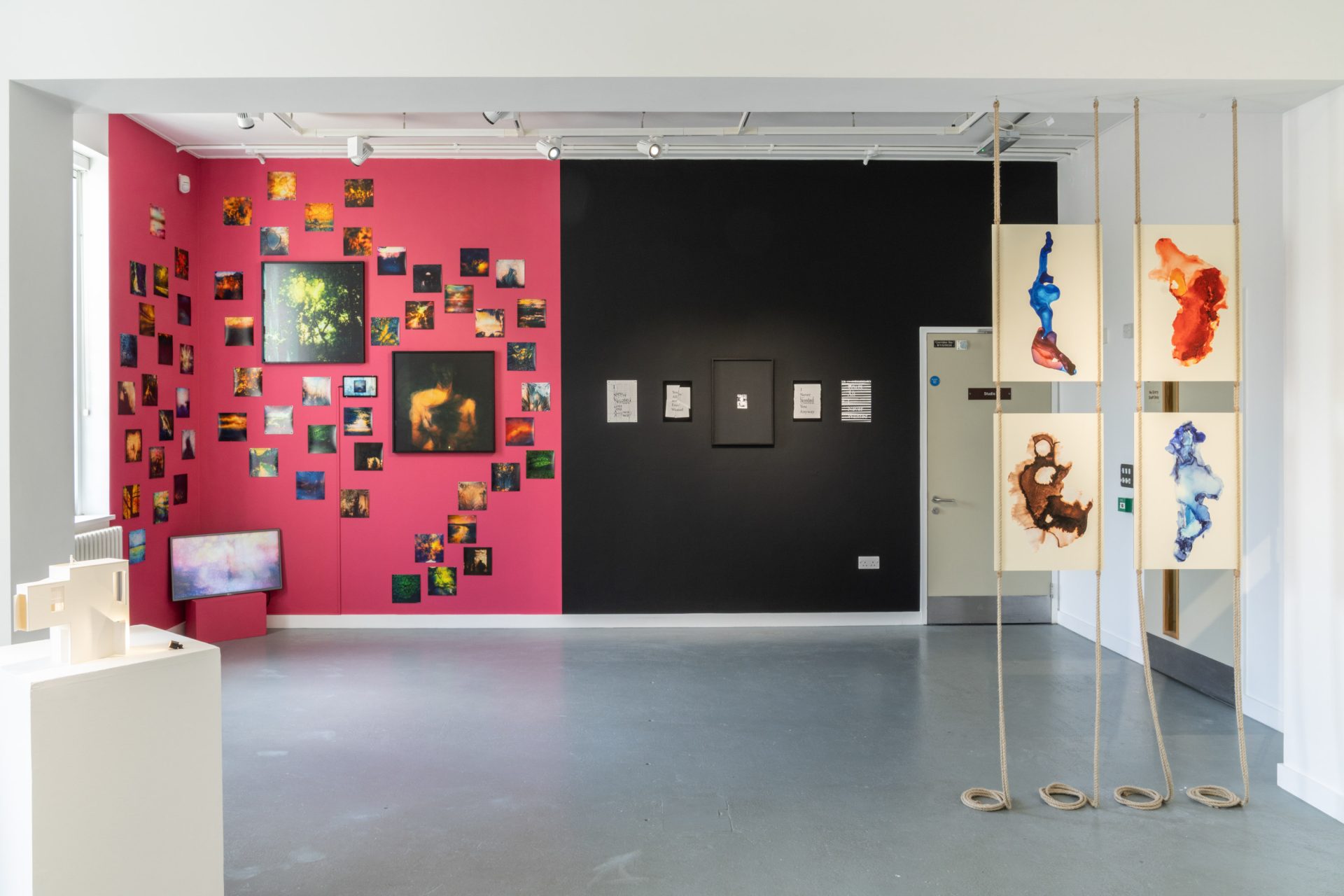
Two years in the making, Bethlem Gallery’s latest solo exhibition is by the artist Daniel Regan. It brings together new work that reveals the artist moving beyond pure photography – with exquisite drawings, inks and moving image – to explore themes of family estrangement, neurodivergence, and adoption.
ON (BE) LONGING
KS: One of the first things that strikes the viewer is the name of the exhibition – (be)longing, with the “b” in parentheses. How do you define belonging, and how did the idea come about in your work?
DR: I had to look up the dictionary definition myself, which is ironic! It mentioned a sense of comfort and acceptance within a group. I don’t think I’ve concluded my own sense of belonging – it’s always shifting. For me, this show is about the longing to belong – because belonging hasn’t always been my experience. I like that as a definition, it’s broad – lots of people can access it. And the project involves conversations with others who’ve been generous in sharing their experiences.
KS: In your artistic practice – especially your community-oriented work – how has this idea of belonging shaped what you do?
DR: There’s this idea from art school that a “successful artist” makes work, shows it in a white walled gallery, and sells it – but that’s not the reality for most artists. For me, it’s about finding your own pathway – things that you genuinely care about. That’s why I work with other artists. I love those conversations and supporting others. Being an artist can be lonely, so having a community feeds my practice.
KS: There’s a solitary aspect, but also moments where you realise others share the same struggles -that creates a kind of belonging too.
DR: Exactly. This project has involved what I call a “village”- sometimes more like a town – of people who’ve supported me, given feedback, and helped me navigate what’s appropriate to share.
Click here to listen to Daniel talk about his Islands works.
ON PHOTOGRAPHY AND DRAWING
KS: This exhibition also shows a shift in your practice – from photography into other forms. Can you talk about that transformation?
DR: Interestingly, you say “photographer” – I don’t really identify with that term anymore, even though I trained in it.
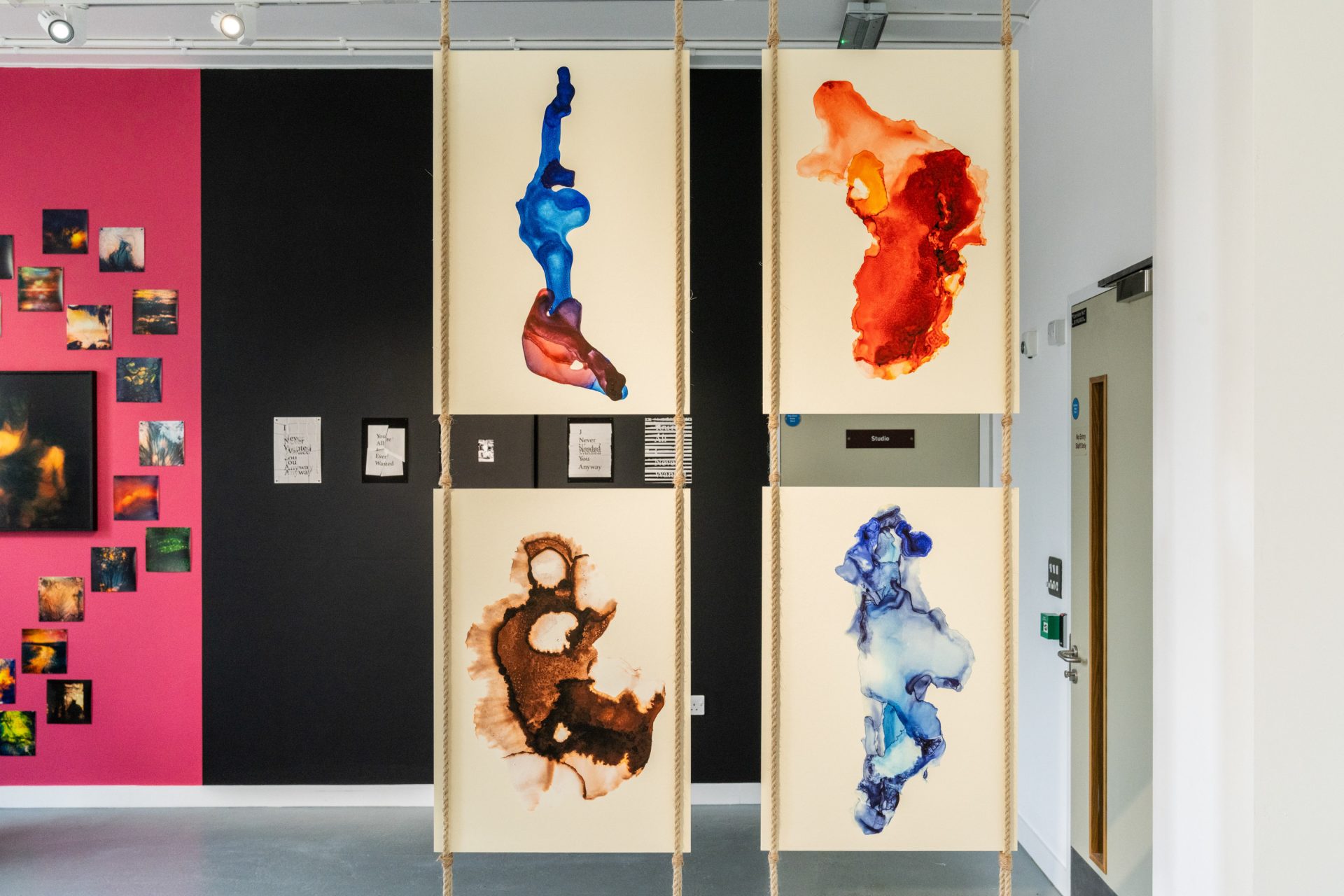
About five years ago, I started feeling limited by photography. I began drawing privately while working on a project about racism and my mental health. The drawings helped me process things.
At first, they weren’t “artworks,” but they became part of the final pieces. Since then, I’ve been exploring other media.
KS: The drawings feel very tactile and meditative – almost quiet compared to photography.
DR: Sometimes they are meditative, but sometimes they’re frustrating. I either work for four hours straight or give up after four minutes.
I think I was craving something more tactile -less screen-based.
Click here to listen to Daniel talk about his drawings here.
ON REVEALING AND CONCEALING
KS: Some drawings look like writing but aren’t readable – almost asemic. Can you talk about that?
DR: I’m interested in oversharing and under-sharing. I like giving the illusion of access, but then denying it.
Some drawings are real words rewritten until they become unreadable. It’s a way of encoding thoughts.
Part of that comes from childhood – having private writing read by others – so there’s a desire to conceal.
KS: That ties into artistic agency – what to reveal and what to conceal. How do you navigate that?
DR: I’ve been thinking about that a lot. Some works are years old; others are very recent.
For example, I’ve been working with a genealogist, and that’s brought up big shifts in my identity. Some of that work is shared, some isn’t – it depends on if I’m ready.
I rely on others- my partner, friends, peers, my therapist and supervisor – to help me decide what’s safe to share.
KS: Do you feel pressure to reveal personal things?
DR: Not anymore. People are curious, but I have boundaries now. I’ll just say no if I don’t want to share something.
KS: That idea of boundaries seems crucial, especially when your work is personal.
DR: Absolutely. It’s about self-care – finding a level of vulnerability that doesn’t become distressing.
ON ARTIST INSPIRATION
KS: Who are the artists or influences that have shaped your work?
DR: Recently I saw an exhibition by Julie Mehretu in Sydney and stayed for three hours – which is unusual for me……So sometimes I’m, like, done in 10 minutes.
And I really was profoundly moved by her beautiful abstract drawings and paintings – just gorgeous mark-making. I suddenly felt really validated, like, “Oh, there are amazing artists who draw however they want to.”
Conceptually, her work isn’t always immediately clear in terms of its source. I was so interested in her process – how she gets from A to B, the meaning and hidden meaning behind the works. That exhibition and learning more about her process inspired my drawing practice.
Going back to this idea of the “village” or “town” that might turn into a megacity.
In fact, so many of the works in this exhibition have been informed by generous, deep conversations with people. Ordinary conversations have been profound sources of inspiration.
There’s also a professor -Jeffrey L. Cohen – who has done beautiful research on belonging. His book Belonging and hearing him speak on podcasts really helped me think about what belonging means, what factors create it or prevent it, and how it operates differently across contexts – like being a student, or part of a cultural group.
I get inspired by many things – and weirdly, it’s not always looking at artworks!
AUDIENCE (FINAL) QUESTION
Audience Member: What’s your favourite colour?
DR: Red. Then yellow. Shocking Pink is climbing the ranks.
Click to listen to Daniel talk about his C15H25N30 works here.
If you’d like to watch the recording of the full In Conversation, please contact info@bethlemgallery.com and we can send you the link.